
Why Choose Us?
Quality Assurance
Our products meet the strictest safety standards and have undergone rigorous testing to ensure the highest quality.
Competitive Pricing
We offer competitive pricing without compromising on quality.
Customer Service
We provide excellent customer service with a dedicated team to offer support and answer any questions.
Fast Delivery
We offer fast and efficient delivery of our products.
Rich Experience
We have years of experience in the industry and have built a reputation for reliability and quality.
Wide Product Range
We offer a wide range of products to meet the needs of various industries and applications.
What is Seat Belt Extension?
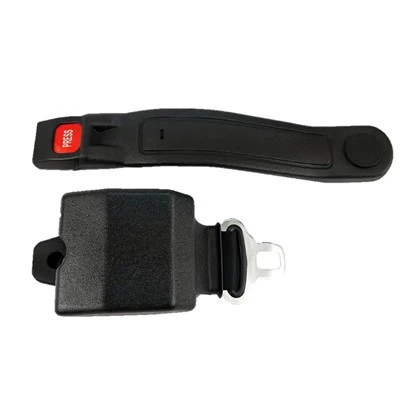
Seat belt extensions are simple devices that extend the length of your seat belt, making it easier to fasten and wear comfortably. They are typically made of high-quality materials and are designed to meet the same safety standards as regular seat belts. Seat belt extensions come 225mm lengths and sizes, and they can be used in almost any type of vehicle, including cars, trucks, and vans.
-

Best Seat Belts for Classic Cars
Type:Safety Belt. Material:Polyester. Point Type:2 Points. Size:12+63 or according to you. Add to Inquiry -
Auto Seat Belt Extenders
Type:Safety Belt. Material:Polyester. Point Type:2 Points. Size:12+63 or according to you. Add to Inquiry -
Middle Seat Belt Replacement
Type:Safety Belt. Material:Polyester. Point Type:2 Points. Size:60 or according to you need. Add to Inquiry -
Seat Belt Pros
Type:Safety Belt. Material:Polyester. Point Type:2 Points. Size:60 or according to you need. Add to Inquiry -
Seatbelt Style Belt
Type:Safety Belt. Material:Polyester. Point Type:2 Points. Size:60 or according to you need. Add to Inquiry -
Seatbelt Adjuster for Short Adults
Type:Safety Belt, extender seatbelt. Material:Polyester. Point Type:3 Points. Size:8+120. Add to Inquiry -
Front Seat Belt
Type:Safety Belt, extender seatbelt. Material:Polyester. Point Type:3 Points. Size:8+120. Add to Inquiry -
Seat Belt Set
Type:Safety Belt. Material:Polyester. Point Type:3 Points. Size:12+125 / according to you. Add to Inquiry -
Car with Automatic Seat Belt
Type:Safety Belt, extender seatbelt. Material:Polyester. Point Type:3 Points. Size:8+120. Add to Inquiry -
Seat Belt Extender Advance Auto
Type:Safety Belt. Material:Polyester. Point Type:2 Points. Size:12+63 or according to you. Add to Inquiry -
Seatbelt Buckle Extender
Type:Safety Belt. Material:Polyester. Point Type:2 Points. Size:12+63 or according to you. Add to Inquiry -
Custom Car Seat Belts
Type:Safety Belt. Material:Polyester. Point Type:2 Points. Size:12+63 or according to you. Add to Inquiry


Advantages of Seat Belt Extension
Improved Comfort
A seat belt extension can offer added comfort for individuals who find that a regular seat belt is too tight or short. This can especially benefit those who are larger in size or pregnant women.
Avoid Citations and Fines
If a driver is caught without a properly functioning seat belt, they may be subject to citations, fines, or even legal penalties. Using a seat belt extension can help individuals avoid these potential consequences.
Improved Safety
A properly secured seat belt is one of the most effective ways to prevent injury and minimize the severity of injuries sustained in the event of an accident. A seat belt extension can provide increased protection for those who may not be properly secured otherwise.
Easy Installation
Seat belt extensions are typically easy to install and can be purchased at most automotive stores or online retailers. They can be attached to the existing seat belt in a matter of seconds with little to no effort.
Cost-effective
In many cases, seat belt extensions can be a cost-effective solution for individuals who are unable to afford more expensive modifications to their vehicles to accommodate larger seat belt sizes. This can help improve safety while also being budget-friendly.
Types of Seat Belt Extension
Regular Lengths
● 7” - This is our most popular extender length and is great for many people and situations. If you have a buried receptacle in the back seat that can't be accessed, the 7” Regular Extender is the most natural choice to keep it out and available.
● 10” - If you want the regular style, but the 7" doesn't allow you to buckle up, then the 10" might be a good solution.
Adjustable Length
The Adjustable Extender can become any length between 9.5" and 26", and adjusts similarly to an Airplane Belt Extender. It is well suited for anyone who needs more than 10", as well as situations in which it is unknown how much length will be needed.
Rigid Lengths
● 3” (Mini) - The 3” Rigid Extender, also known as the Mini Seat Belt Extender, may be a great choice in numerous situations. The Mini is suitable when a receptacle is buried or low in the front or back seats and inaccessible. People also often enjoy the Mini Extender when the seat belt is so tight that the occupant can't turn or breath reasonably and wearing the seat belt in that fashion is impeding driving - or also when the occupant is wearing bulkier winter clothes.
● 5” - A 5" extender works when the Mini just isn’t going to get the job done. If 3” is too short to resolve the issues above, turn to the 5".
● 7” - The 7" Rigid Extender may be a great choice for people who are smaller bodied but have mobility impairments that impede motion in the shoulders, neck and back and therefore can't otherwise buckle up. The reason is that it raises the receptacle to a more accessible position, thereby reducing the amount of movement required to buckle up.
● 8” - This is an excellent length for most law enforcement, like police officers and sheriffs, because it raises the receptacle high enough to reduce interference with equipment on their utility belts. This helps the seat belt retract horizontally towards the door rather than in an arc around the body of the officer, potentially catching on something from the utility belt. This is also a common length for many plus-sized people.
● 11” - 11" extenders should only be used when a Rigid Extender is the only style desired and no shorter length of Rigid Extender will do. It should only be used with people suffering from severe mobility impairment, surgery or physical challenges who require as little movement as possible when buckling themselves in and can't otherwise. Plus sized people in need of this much length in order to buckle the seat belt will benefit from an this extender.
Applications of Seat Belt Extension
Law Enforcement
As law enforcement personnel, if your challenge is your utility belt, measure from the top of the receptacle to just below the upper height of your utility belt when you' re sitting in your seat. That distance is likely 7-8", but even if it's a little more, we recommend not choosing longer than the 8" Rigid Extender unless your size requires it.
Plus Sized People
Larger people tend to have the widest variety of options regarding the extender they may get. Sit in your car and pull the seat belt across your body. Spread out the fingers of your hand so that your pinky and thumb are as far away as possible. Put your hand between the two unconnected ends of the seat belt with your pinky and thumb at either end. Half this distance on your hand should encourage you to try a 3" or 5" Rigid Extender, a bit less than this distance suggests that a 7" extender is best, about the distance between pinky and thumb should guide you towards an 8" or 10" extender and more than this distance should persuade you to try an 11" extender or the Adjustable Extender.
People with Disabilities and/or Mobility Impairments
If the seat belt fits across your body and buckles in but you have mobility impairments due to a chronic medical condition, injuries, surgeries or other challenges that prevent you from buckling up without an extender, then choose the shortest possible length that will allow you to buckle up again. Typically, a 5", 7" or 8" Rigid Extender is the best length due to the rotation of the arms, body, torso and back otherwise required to buckle up that you may not be able to do. If you want to be more precise, sit in the seat and try buckling up. Measure the distance between the two ends of the seat belt when the task of buckling up becomes impossible to complete. That is the length extender that you should consider.
Limo, Uber, Taxi, Ride-share, NEMT
Those who transport other people in their vehicles should consider the Adjustable Extender, as it allows the passenger to adjust the extender to the length that most suitably accommodates his needs.
Low or Buried Receptacle
If you have a low receptacle in the front seat, try the 3" or 5" Rigid Extender so you can access the receptacle and buckle up where you couldn't before. If you have a low or buried receptacle in the backseat try either a 3" or 5" Rigid Extender or the 7" Regular Extender. Remember to choose only as much length as needed to buckle in where you couldn't.
The Elderly
In most cases, the 3" or 5" Rigid Extender does the trick. If your buckling challenge is related to arthritis, joint pains or other general discomforts, try buckling up and at the point the pain makes buckling up no longer possible, stop and measure the distance between the two ends of the seat belt. Try that length extender.
Bulky Clothes or Coats
If your seat belt is already feeling like it's too tight, wearing bulky clothes like winter coats may make it impossible to buckle up. Give yourself some breathing room with a 3" extender.
5 Reasons Why Seat Belt Extensions Can Save Your Life

Prevent Serious Injuries
During a crash, the force of the impact can cause serious injuries to your body. If you are not wearing a seat belt or are wearing one that does not fit properly, you risk severe injuries to your head, neck, chest, and abdomen. A seat belt extension can help prevent these injuries by ensuring that the seat belt fits snugly around your body, providing maximum protection in the event of an accident.
Improve Driving Posture
Driving for extended periods can be tiring and uncomfortable, especially if you have to constantly adjust your seat belt. A seat belt extension can help improve your driving posture and reduce fatigue by making it easier to adjust your seat belt to a comfortable position. This can help you stay alert and focused on the road, reducing the risk of accidents.
Allow for Child Seats
When you have a child seat installed in your car, it can be challenging to fasten your seat belt properly. A seat belt extension can make it easier to fasten your seat belt while still accommodating the child seat, ensuring that both you and your child are safe on the road.
Accommodate Medical Conditions
Some medical conditions can make it difficult to fasten a seat belt properly, such as obesity, pregnancy, or chronic pain. A seat belt extension can help ensure that you can buckle up comfortably, reducing the risk of injury in the event of an accident.
Better Fit for Tall People
Tall people may find that standard seat belts are not long enough to fit comfortably around their body. A seat belt extension can provide the extra length needed to ensure a snug and secure fit, reducing the risk of injury in the event of an accident.
When Not to Use Seat Belt Extension?
Seat belt extenders are not safe when used for:
Child car seat or booster seat
Children
Pregnant woman (unless her body size does not allow the buckling ofa seatbelt)
Adults without a valid need for an extender
Components of Seat Belt Extension
01/
Buckle
The buckle is a mechanism that is used to fasten and unfasten the seat belt extension to the car seat belt. It is usually made of high-strength plastic or metal.
02/
Tongue
The tongue is the part of the seat belt extension that slides into the buckle and is secured by a locking mechanism. It is usually made of high-strength plastic or metal.
03/
Webbing
The webbing is the long piece of fabric that connects the buckle to the end of the seat belt extension. It is made of high-strength nylon or polyester and is designed to be strong and durable.
04/
Adjuster
The adjuster is a small device that allows the length of the seat belt extension to be adjusted. It is usually located on the webbing near the buckle.
05/
Connector
The connector is a small piece of metal or plastic that is used to attach the seat belt extension to the car's seat belt. It is designed to be strong and secure.
06/
Release Button
The release button is a small button located on the buckle that allows the seat belt extension to be released quickly and easily in case of an emergency. It is usually brightly colored and easy to identify.
Tips for Using a Seat Belt Extension Correctly
To ensure that your seat belt extension is working correctly, you should follow these tips:
● Always make sure that the seat belt extension is securely fastened and fits snugly around your body.
● Check the extension regularly for signs of wear or damage and replace it if necessary.
● Do not use a seat belt extension if it is not designed for your specific vehicle.
● Only use seat belt extensions that meet safety standards and are made of high-quality materials.

What Makes Up High Quality Seat Belt Extension?
High Strength Tenacity
Tenacity is a measurement of the breaking strength of the webbing. The maximum tensile strength is usually marked on the seat belt extension. This is the maximum amount of force the seat belt extension can withstand before it breaks. A highly tenacious seat belt extension is made of high-strength fibers and requires an equal or greater strength to break it.
Resistance to Abrasion
Abrasion is a significant factor for webbings used in the automotive industry. Seat belt extension must have the correct level of resistance to abrasion to protect the user against car parts during a crash. Abrasion resistance is measured in terms of cycles. It is the number of times the seat belt extension can be stretched out, then relaxed, and stretched out again before it finally breaks. The more cycles a webbing can withstand, the better.
Low Moisture Regain
Moisture regain is the measurement of how much weight the seat belt extension gains after absorbing moisture. The seat belt extension should not increase more than 30% of its dry weight. After absorbing moisture, some seat belt extensions increase as much as 100% of their original weight, so make sure to check this with the supplier before getting the webbing.
Can Withstand Extreme Temperature
Seat belt extension is used in various applications, and some of them require the webbing to withstand extreme temperatures. The temperature range is typically between -40 to 400 degrees Fahrenheit. The seat belt extension should be able to withstand the temperature without any change in the physical properties.
Does Not Burn Easily
As a safety product, seat belt extension must be fire retardant. This is another reason why seat belt extension is often made of nylon and not polyester. Nylon is more resistant to fire than polyester.
Resistance to Most Chemicals
Chemicals can damage the seat belt extension and dramatically alter its physical properties. The seat belt extension used in car crashes must be resistant to gasoline, oil, and other common car chemicals. Unfortunately, not all seat belt extension can withstand most chemicals. For example, the seat belt extension must not completely dissolve in gasoline.
Products Description
Cleaning Seat Belt Extension
If you think seat belt extension don’t need cleaning, you better think again. Dirty seat belts can become fragile due to the regular disintegration of the material. This means it also needs to be cleaned every now and then to make sure that the belt itself and the other components don’t deteriorate that fast. Cleaning your seat belts is easy enough, but you need to be careful with it. Start by stripping them down and removing the buckles. Then try tugging on the belt using an upward and downward motion. To move the mount tabs and buttons, use paint scrapers and screwdrivers gently when prying them out. Use only mild cleaning solutions and dry each part out completely before putting them back together. Avoid using strong or acidic bleach, dye, or detergent as they can be too strong and can damage the integrity of the parts.
Polishing and Detailing
Seat belt extensions have a steel part on their locking mechanism, which can be corroded over time. When that happens, you can polish it with a high-grade chrome cleaner and apply it using steel wool. For the plastic buckle covers, you need some sandpaper and a mixture of liquor soap and water as a lubricant. For best results, apply a light coat of paint swirl remover on the plastic cover after polishing it.
Remove Clogs from the Buckle
A seat belt’s buckle is prone to clogging over time due to all the buildup of dust and dirt on the opening. While you don’t need to clean the buckle that often, it’s still best to clear the opening from any clogs to make sure that it doesn’t malfunction when in use. A clogged-up buckle has a risk of not working properly or the locking mechanism failing to hold. To clean the buckle, you can dust off some of the particles, then spray a small amount of WD-40 to keep the buckles rust-free and smooth. Do this at least once every few months, and you don’t have to worry about your buckles becoming clogged up.
Have Your Seat Belt Extension Inspected After a Collision
In an accident, extreme forces are suddenly applied to every part of your vehicle, including your seat belt extensions. If you’ve been in a collision, those same forces could compromise the strength and durability of your seat belts. You’re not supposed to just let them be after such an event. All seat belt parts must be inspected and repaired to ensure that all of its components are still in good condition. If your seat belt becomes locked and disabled, it needs to be replaced and restored so it can be used once again.
Installing a Seat Belt Extender
Get the Right Seat Belt Extender
You should be able to find a universal seat belt extender at any well-stocked automotive store. You can also buy them online. Though the fittings on seat belt extenders are universal, the belts themselves do come in different lengths. The available lengths are normally 6 or 12 inches. Choose the best one for your purposes.
Detach the Seat Belt
Find the end of the seat belt inside the car. This will be attached to the door frame or the seat itself. The seat belt should be attached by a heavy duty nut and bolt that you can remove using the adjustable spanner. Remove the seatbelt away from the assembly.
Put in the Seat Belt Extender
To install the extender, simply place the bent end of it in the place where you just removed the seat belt. Replace the nut and bolt that you removed earlier, and the seat belt extender should be fixed in place. Be sure that it is as tight as possible.
Finish Up
Before you use the modified seat belt, check over the connecting parts again to make sure that all of the nuts and bolts are adequately tight. If they are at risk of coming loose, it will negate the purpose of the seat belt in the first place. When you are satisfied that the extender has been installed correctly, you can use the car again.
Inexpensive Seat Belt Repair Using a Seat Belt Extender
I found a seat belt extender that I thought might solve the problem
Somehow in my internet search I stumbled onto seat belt extenders. These are used mostly by folks whose girth is either too large for the standard length seat belt OR for people like police officers who have difficulty with their gun belts catching on a regular seat belt and who have found that a seat belt extension helps circumvent that issue. Most extenders are anywhere from 3 to 9 inches long.
The short seat belt extender essentially replaced the broken seat belt buckle
I used my tiny screwdriver to get the tongue of this short extender locked into the existing buckle mechanism. It made the "new buckle" just over 2 inches longer. Although it was not one of my goals, this added length actually made it easier to buckle the seat belt, because once you were sitting in the seat, you often had to dig between your hip and the console for the old seat belt buckle. Whereas this new extension was more prominent. The original seat belt tongue now clicked easily into the extender buckle.The seat belt extender would be left permanently locked into the original seat belt buckle, as it had now effectively become the new buckle. Our seat belt problem had been solved.
How to Choose the Right Seat Belt Extender
Consider the type of vehicle it is to be used in
Extenders are available for almost all vehicle types, but some work better in some vehicles rather than others.
Check the certifications to be sure it is in compliance with safety standards
Some companies disavow liability in the event of an accident, while others will place blame on the safety organizations on the packaging. It is important when purchasing an extender for a car or truck, look for approval from the Federal Motor Vehicle Safety Standards organization.
Determine how the extender is to be mounted
Some simply click into the existing belt to provide the extension. While other models require they be mounted in a similar fashion to the existing safety harness on the frame of the vehicle.
Check the fitting guidelines before buying
This will guarantee the extender will meet your needs. To find the size, which is needed. With the person, whom the extension is being purchased for sitting in the seat, pull the existing belt out as far as it will go. Use a tape measure to measure the existing gap between the belt and the hook. This will be the minimum size for your extender.
Select an extender, which doesn't change the original seat belt's position
The shoulder harness should fit correctly in the same body position as if only the original equipment is used to offer maximum protection.
Select an extender, which matches your vehicles existing safety restraint
Most extenders come in standard colors to match most manufacturers models. However, before purchasing, carefully check the model standards for the extender you are considering. Don't base your purchase strictly on color alone.
Certifications
ISO 9001:2015

Our Factory
Good Success Corp. was established in 1976 in Changhua, Taiwan and has been a specialized manufacturer in car seat belts, Ratchet Tie Downs , Tow Straps , car lashing , sling , webbing , hooks. Occupying a land space of more than 50,000 sq. ft.


Ultimate FAQ Guide to Seat Belt Extension
Q: Is it safe to use seatbelt extenders?
A: The only time it is safe to use a seat belt extender in a car is when both of the following criteria are met: The person using the extender is an obese teenager or adult whose body size is such that the seat belt can not be buckled without the use of an extender.
Q: Do seat belt extenders fit all cars?
A: An extender's Type is determined by the exact shape of its metal tongue as paired with its receptacle. Just as different cars have different specifications, so do seat belt extenders.
Q: Are seat belt extenders legal on a plane?
A: Airlines do provide seat belt extenders on flights as they are required by law to do so at no charge. Travelers are discouraged from bringing their own seat belt extenders, since the FAA would not be able to ensure that extenders brought by passengers are compliant with safety regulations.
Q: Are seat belt extenders legal in UK?
A: Seatbelt extenders are legal to use but only if the user simply cannot use the existing seatbelt due to body size. Most vehicle manufacturers advise you should only use a seatbelt extender sourced or approved by the car company itself.
Q: Will I need a seat belt extender at a size 22?
A: Size 22 pants have a waist size of 44” and more important, a low hip measurement of 52”. Based on this and the table in the link above, the answer is yes, you will need a seat belt extender.
Q: Can you buy your own seatbelt extender?
A: STRESS FREE - No longer fret about the airline having an extender for you or having to ask a flight attendant for an extension. Eliminate this uncomfortable situation and don't feel embarrassed. Just bring your own extender and fly in peace.
Q: How do you ask for a seat belt extender?
A: She suggested asking directly. “Just ask for the extender, and don't feel the need to explain why it is needed,” she said. If it makes you more comfortable, you can also buy seat belt extenders. However, using the ones provided is probably the way to go, since some airlines may not allow you to bring your own.
Q: Do you have to pay for a seat belt extender?
A: Delta Air Lines and American Airlines also offer this service free of charge. This is a great convenience for passengers with larger body types or individuals who may need a little extra length to fasten their seat belts comfortably.
Q: How do I know if I need a seatbelt extender?
A: You can also ask the flight attendant when you board the plane if you are unsure if you will need an extender. If you do need a seat belt extender, there's no need to feel embarrassed or self-conscious. It's important to be comfortable and safe during your flight.
Q: Are all seat belt extenders the same?
A: An extender's type is determined by its unique pairing of metal tongue and receptacle. Only purchase a specific Type of extender if you know the exact dimensions of both it's metal tongue and your seat belt metal tongue, and you know that they are identical in every way.
Q: What size do you need seat belt extender?
A: Typically, a 5”, 7” or 8” Rigid Extender is the best length due to the rotation of the arms, body, torso and back otherwise required to buckle up that you may not be able to do. If you want to be more precise, sit in the seat and try buckling up.
Q: Why do people use seat belt extenders?
A: A seat belt extender is an extra piece that goes between the male and female ends of the seat belt to make the seat belt longer. An extender allows an obese adult to buckle up in situations where the belt is otherwise too short to go around their body.
Q: What is the advantage of a stretching seat belt?
A: Hint: Car seat-belts are designed to be stretchable, as stretching the seat-belt allows the large momentum of a passenger to reduce gently and the passenger is prevented from being thrown forward violently. Therefore, major injuries can be prevented if the car suffers a collision.
Q: How will I know if I need a seat belt extender?
A: Once you board your flight and buckle yourself in, ask for a seat belt extender if the belt feels tight around you.
Q: Is it safe to use seatbelt extenders?
A: Seatbelt extenders are perfectly safe when used correctly and matched to the car in use. They should only be used for adults who cannot fit in a regular seatbelt, and never out of convenience or to make buckling-in easier for children.
Q: How can I make my seat belt more comfortable?
A: Secondly, make sure you wear the second strap across your shoulder and chest. The seat belt must not go around or choke your neck from any angle. As long as you're doing this and wearing a seat belt shoulder pad, it should be comfortable.
Q: What if you need a seat belt extender you are too fat to be on a plane?
A: Yes some obese passengers will need a seatbelt extender. It just depends on how obese they are. They will not be assigned seats away from other customers.
Q: How do I stop my seatbelt from cutting into my neck?
A: If the strap feels like it's cutting into your neck, try moving your seat forward or backward. Newer cars allow you to correct this issue with a restraint system. If all else fails, purchase a padded seat belt cover. You can find these in most big box stores.
Q: Why do seat belts lock up after a crash?
A: A small sensor connected to your car airbag system governs the whole safety mechanism. It detects a sudden change in the car speed or a rapid force applied to the seatbelt and initiates the locking mechanism.
Q: Do seatbelts lock when you accelerate?
A: An inertial locking mechanism of a seatbelt is designed to prevent further seatbelt extension when it exceeds an acceleration threshold. The acceleration threshold varies with the orientation of the mechanism and direction of acceleration.
Good Success Corp. is one of the leading seat belt extension manufacturers and suppliers in China. We warmly welcome you to buy cheap seat belt extension for sale here from our factory. All customized products are with high quality and competitive price. Contact us for more details.
Front Seat Belt, Auto Seat Belt Extenders, Best Seat Belts for Classic Cars