

Hey there! I'm a supplier of polyester webbing, and I'm super stoked to take you on a journey through how polyester webbing is made. Polyester webbing is one of those versatile materials that you might not think about much, but it's all around us, from seat belts in our cars to the straps on our backpacks.
Starting with the Raw Material
Let's kick things off with the raw material. Polyester, the star of the show, is a synthetic polymer. It's made from a chemical reaction between an acid and an alcohol. Sounds a bit science - y, right? But it's actually a well - established process. The most common type of polyester used for webbing is polyethylene terephthalate (PET).
We source high - quality PET in the form of small chips. These chips are like the building blocks of our polyester webbing. They're made in large chemical plants where the raw chemicals are carefully mixed and reacted under specific conditions of temperature and pressure. The quality of these chips is crucial because it directly impacts the strength, durability, and overall performance of the final webbing product.
Melting and Spinning
Once we have our PET chips, the next step is to turn them into fibers. We start by melting the chips in a large extruder. The extruder is like a big, high - tech oven that heats the chips to a temperature of around 260 - 280 degrees Celsius. At this temperature, the chips turn into a thick, molten liquid.
This molten polyester is then forced through a spinneret, which is a device with tiny holes. As the liquid polyester is pushed through these holes, it forms long, thin filaments. It's a bit like squeezing toothpaste through a tube with lots of tiny nozzles. These filaments are immediately cooled by a blast of air, which solidifies them into polyester fibers.
The thickness and strength of the fibers can be adjusted by changing the size of the holes in the spinneret and the speed at which the molten polyester is pushed through. For our webbing, we usually produce fibers with a specific denier (a unit of measurement for fiber thickness). Different deniers are used depending on the intended use of the webbing. For example, a heavy - duty strap might require thicker fibers, while a lighter - weight decorative webbing can use thinner ones.
Twisting and Plying
After the fibers are formed, they're often twisted together to create yarns. Twisting the fibers gives them more strength and stability. We use special machines called twisters to do this. The fibers are fed into the twister, which rotates them in a specific direction to create the desired twist.
Sometimes, multiple yarns are then plied together. Plying means twisting two or more yarns around each other. This further increases the strength and durability of the material. For instance, if we're making a seat belt webbing, we'll ply several yarns together to ensure it can withstand high levels of stress. Check out our 3 Panel Seat Belt Webbing for a great example of a product made with carefully plied yarns.
Weaving Process
Now comes the exciting part - the weaving process. Weaving is how we turn the yarns into the familiar webbing that you see. We use looms for this. There are different types of looms, but the most common ones for polyester webbing are shuttle looms and rapier looms.
In a shuttle loom, a shuttle carrying the weft yarn (the yarn that runs across the width of the webbing) is passed back and forth through the warp yarns (the yarns that run lengthwise). The warp yarns are held taut on the loom, and the shuttle moves through them to create the interlacing pattern. This process is a bit slower but can produce very high - quality webbing with a tight, even weave.
Rapier looms, on the other hand, use a rapier (a thin, flexible blade) to carry the weft yarn through the warp. They're faster and more efficient, making them great for large - scale production.
During the weaving process, we can create different patterns and textures on the webbing. For example, we can make a plain weave, which is the simplest pattern where the weft yarn goes over one warp yarn and under the next. Or we can create more complex patterns like twill weaves or satin weaves. These different weaves can affect the look, feel, and performance of the webbing.
Dyeing and Finishing
Once the webbing is woven, it's time to give it some color and finish it off. Dyeing is done in large vats where the webbing is immersed in a solution of dyes. We use a variety of dyes, including disperse dyes, which are specifically designed for polyester. These dyes bond well with the polyester fibers, ensuring that the color is fast - fading and long - lasting.
We can create a wide range of colors, from bright neon shades to more muted earth tones. For example, our Orange Webbing is a popular choice for safety applications because of its high visibility.
After dyeing, the webbing goes through a finishing process. This can include treatments to make the webbing more resistant to UV rays, water, and abrasion. We might also apply a coating to make the webbing smoother or to give it a special texture.
Quality Control
Throughout the entire manufacturing process, we have strict quality control measures in place. We check the raw materials for purity and consistency. During the fiber - making process, we monitor the thickness and strength of the fibers. When the webbing is being woven, we inspect it for any defects such as loose threads or uneven weaves.
After dyeing and finishing, the webbing is tested for colorfastness, strength, and other performance properties. We use specialized equipment to perform these tests, ensuring that every roll of webbing that leaves our facility meets our high standards.

Applications of Polyester Webbing
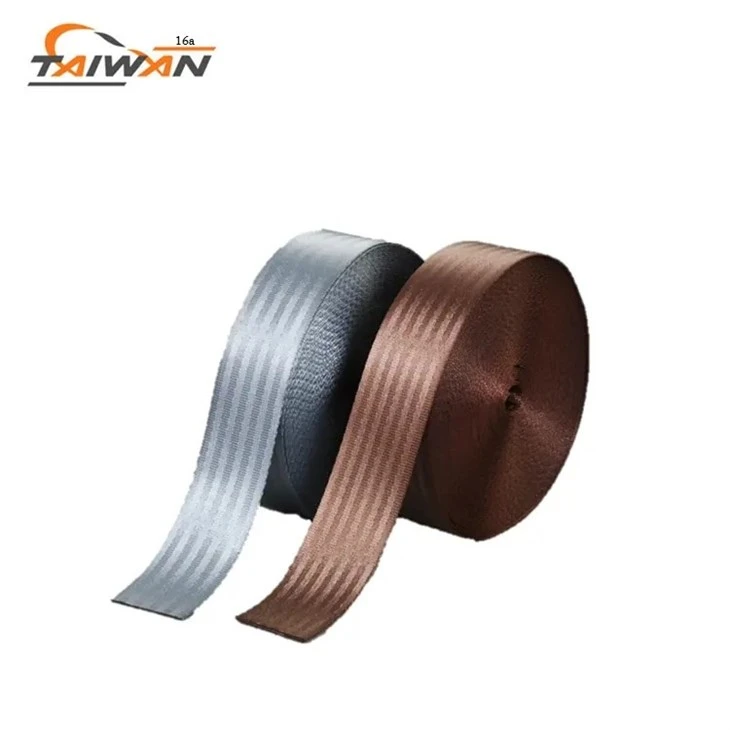
Polyester webbing has a ton of applications. In the automotive industry, it's used for seat belts, headrests, and other interior components. In the outdoor and sports industry, it's used for backpack straps, camping gear, and climbing equipment. Military and tactical applications also rely on polyester webbing, like our Strap Webbing Army, which is used for things like ammo belts and load - bearing vests.
Why Choose Our Polyester Webbing
As a supplier, we take pride in our polyester webbing. We use the latest manufacturing techniques and high - quality raw materials to ensure that our products are top - notch. Our webbing is strong, durable, and resistant to wear and tear. We offer a wide range of colors, widths, and patterns to meet the diverse needs of our customers.
If you're in the market for polyester webbing, whether it's for a small DIY project or a large - scale industrial application, we'd love to hear from you. We can provide samples so you can see and feel the quality of our webbing for yourself. Don't hesitate to reach out to us to discuss your specific requirements and start a procurement negotiation. We're here to help you find the perfect polyester webbing solution for your needs.
References
- "Synthetic Fibers: Their Development, Production, and Applications" by John W. S. Hearle
- "Textile Processing and Properties" by Peter H. Herring