

As a nylon webbing supplier, I've witnessed firsthand the increasing demand for heat-resistant nylon webbing in various industries. From automotive to aerospace, the need for materials that can withstand high temperatures without compromising strength and durability is more critical than ever. In this blog post, I'll share some insights on how to make nylon webbing more heat-resistant, drawing on our experience and the latest scientific research.
Understanding the Basics of Nylon Webbing
Before delving into the methods of enhancing heat resistance, it's essential to understand the properties of nylon webbing. Nylon is a synthetic polymer known for its high strength, abrasion resistance, and flexibility. However, its melting point is relatively low compared to some other materials, typically around 215 - 260°C (419 - 500°F), which limits its use in high-temperature applications.
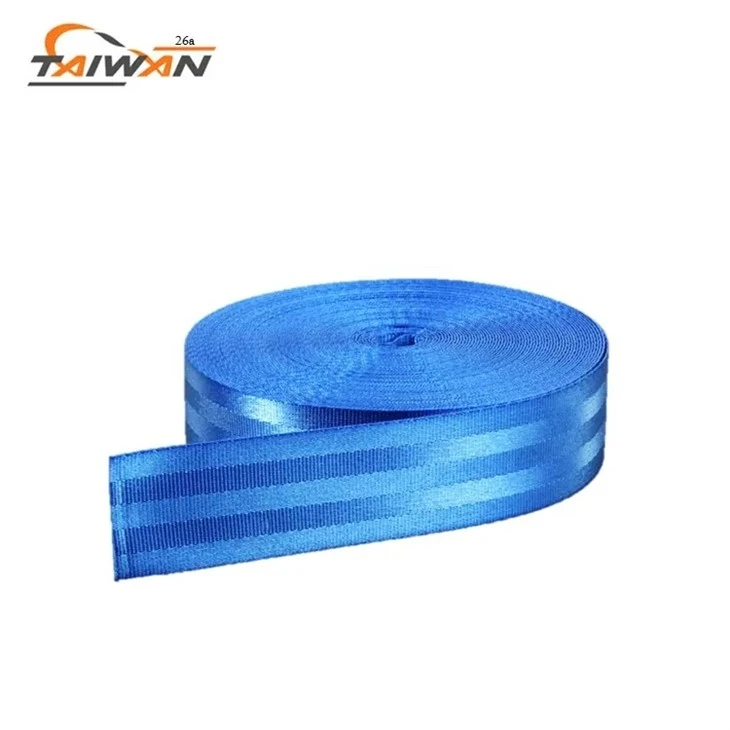
Nylon webbing is commonly used in a wide range of products, including Heavy Duty Nylon Webbing, Custom Seat Belt Webbing, and Heavy Duty Nylon Belts. These products are often exposed to various environmental conditions, and heat resistance can significantly improve their performance and longevity.
1. Selecting the Right Nylon Type
The first step in making nylon webbing more heat-resistant is to choose the appropriate type of nylon. There are several types of nylon available, each with different properties. For example, nylon 6 and nylon 6,6 are the most commonly used types in webbing production. Nylon 6,6 generally has a higher melting point and better heat resistance compared to nylon 6. By selecting nylon 6,6 as the base material for your webbing, you can start with a more heat-resistant foundation.
2. Incorporating Heat-Resistant Additives
One of the most effective ways to enhance the heat resistance of nylon webbing is by incorporating heat-resistant additives during the manufacturing process. These additives can improve the thermal stability of the nylon, delaying its decomposition at high temperatures.
- Flame Retardants: Flame retardant additives can reduce the flammability of nylon webbing and increase its resistance to heat. They work by either releasing non-combustible gases when heated, which dilute the oxygen around the material, or by forming a protective char layer on the surface of the webbing, preventing further heat transfer. Common flame retardants used in nylon include halogenated compounds, phosphorus-based compounds, and inorganic fillers such as magnesium hydroxide.
- Antioxidants: Oxidation can accelerate the degradation of nylon at high temperatures. Antioxidants can prevent or slow down this oxidation process. They react with free radicals generated during oxidation, neutralizing them and preventing chain reactions that lead to material breakdown. Phenolic antioxidants and amine antioxidants are commonly used in nylon applications to improve heat stability.
3. Surface Treatments
Surface treatments can also play a crucial role in enhancing the heat resistance of nylon webbing. These treatments create a protective layer on the surface of the webbing, shielding it from direct contact with heat sources and reducing heat transfer.
- Coatings: Applying a heat-resistant coating to the nylon webbing can significantly improve its heat resistance. Silicone coatings are popular choices as they have excellent thermal stability and can withstand high temperatures. They also provide additional benefits such as water repellency and abrasion resistance. Other coatings, such as ceramic-based coatings, can also be used to create a barrier against heat.
- Laminations: Laminating the nylon webbing with a heat-resistant film or fabric can enhance its heat resistance. For example, laminating with a layer of aramid fabric, which has high heat resistance and strength, can provide an extra layer of protection. The lamination process involves bonding the heat-resistant layer to the nylon webbing using an adhesive, ensuring a strong and durable bond.
4. Manufacturing Process Optimization
The manufacturing process itself can be optimized to improve the heat resistance of nylon webbing.
- Spinning and Drawing: During the spinning and drawing processes, the orientation of the nylon molecules can be controlled to enhance the mechanical and thermal properties of the webbing. By carefully adjusting the spinning speed, draw ratio, and temperature, the molecular chains can be aligned in a way that improves the overall strength and heat resistance of the webbing.
- Heat Setting: Heat setting is a crucial step in the manufacturing of nylon webbing. It involves subjecting the webbing to a controlled heat treatment to stabilize its dimensions and improve its physical properties. By optimizing the heat-setting temperature and time, the webbing can achieve better heat resistance and dimensional stability.
5. Testing and Quality Control
Once the nylon webbing has been treated to improve its heat resistance, it's essential to conduct thorough testing to ensure that it meets the required standards.
- Thermal Analysis: Techniques such as differential scanning calorimetry (DSC) and thermogravimetric analysis (TGA) can be used to measure the melting point, glass transition temperature, and thermal stability of the nylon webbing. These tests can provide valuable information about the material's behavior under different temperature conditions.
- Flammability Testing: Flammability tests, such as the UL 94 test, can be used to evaluate the fire resistance of the nylon webbing. This test classifies the material based on its ability to self - extinguish after being exposed to a flame.
Conclusion
Making nylon webbing more heat-resistant is a multi-faceted process that involves selecting the right materials, incorporating additives, applying surface treatments, optimizing the manufacturing process, and conducting rigorous testing. By implementing these strategies, we can produce nylon webbing that can withstand high temperatures and meet the demanding requirements of various industries.

If you're interested in our heat-resistant nylon webbing products or have any questions about enhancing heat resistance, we'd love to hear from you. Contact us to discuss your specific needs and start a procurement negotiation. We're committed to providing high-quality, heat-resistant nylon webbing solutions tailored to your applications.
References
- "Engineering Plastics: Properties and Applications" by John Murphy
- "Handbook of Polymer Science and Technology" edited by Henry Mark and James Kroschwitz
- Research papers on heat resistance of nylon polymers from academic journals such as Polymer Degradation and Stability