

Nylon webbing is a versatile and widely used material in various industries, from outdoor gear and automotive applications to fashion and home decor. One of the common questions that customers often ask is whether nylon webbing is resistant to UV rays. As a nylon webbing supplier, I am here to provide you with a detailed answer based on scientific knowledge and our practical experience.
Understanding UV Rays and Their Impact on Materials
UV rays, or ultraviolet rays, are a type of electromagnetic radiation emitted by the sun. They are classified into three categories: UVA, UVB, and UVC. UVC rays are mostly absorbed by the Earth's atmosphere and do not reach the surface. UVB rays are responsible for sunburns and can cause damage to the skin and eyes. UVA rays, on the other hand, have a longer wavelength and can penetrate deeper into materials, causing them to degrade over time.
When materials are exposed to UV rays, they can undergo a process called photodegradation. This process involves the breaking of chemical bonds in the material, which can lead to changes in its physical and chemical properties. For example, the material may become brittle, lose its strength, or change color.
The Natural Resistance of Nylon Webbing to UV Rays
Nylon is a synthetic polymer that is known for its strength, durability, and resistance to abrasion. However, nylon webbing is not naturally resistant to UV rays. When exposed to sunlight for extended periods, nylon webbing can start to degrade, especially if it is not properly protected.
The degree of degradation depends on several factors, including the type of nylon used, the thickness of the webbing, the intensity and duration of UV exposure, and the environmental conditions. For example, nylon 6 and nylon 6,6 are the most common types of nylon used in webbing production. Nylon 6,6 generally has better mechanical properties and is more resistant to heat and chemicals than nylon 6. However, both types of nylon are susceptible to UV damage.
Factors Affecting the UV Resistance of Nylon Webbing
1. Additives
To improve the UV resistance of nylon webbing, manufacturers often add UV stabilizers or absorbers to the nylon resin during the production process. These additives work by either absorbing the UV rays or preventing the chemical reactions that lead to photodegradation.
There are different types of UV stabilizers available, including hindered amine light stabilizers (HALS) and benzotriazole-based absorbers. HALS are particularly effective in preventing the degradation of nylon by scavenging free radicals that are generated during UV exposure. Benzotriazole-based absorbers, on the other hand, absorb the UV rays and convert them into heat, which is then dissipated.
2. Color
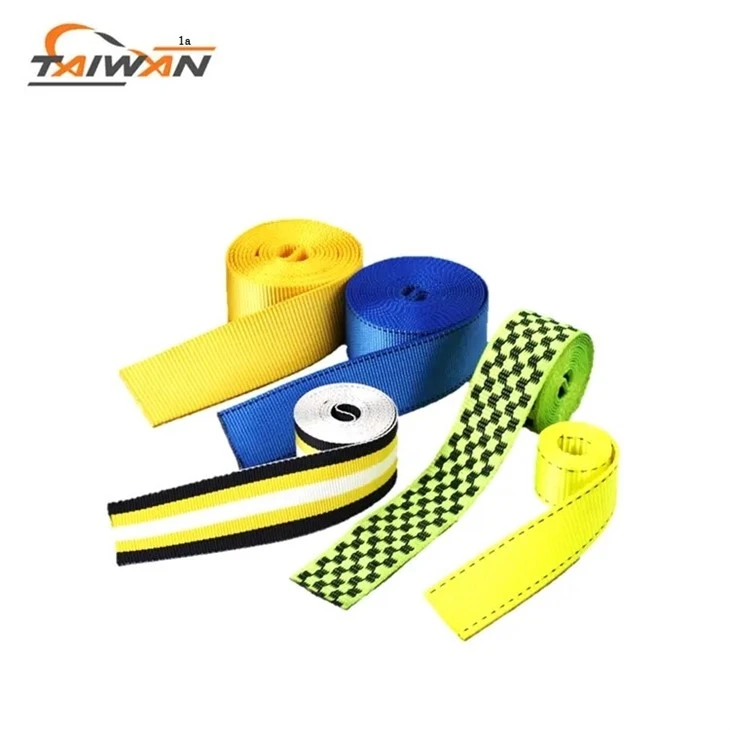
The color of the nylon webbing can also affect its UV resistance. Darker colors, such as black and navy, tend to absorb more UV rays than lighter colors. As a result, they may degrade more quickly than lighter-colored webbing. However, this does not mean that lighter-colored webbing is completely immune to UV damage. It is still important to use UV-stabilized nylon webbing, regardless of the color.

3. Coating
Applying a protective coating to the nylon webbing can also enhance its UV resistance. Coatings can act as a barrier between the webbing and the UV rays, reducing the amount of radiation that reaches the nylon fibers. Some common coatings used for nylon webbing include polyurethane and silicone.
Testing the UV Resistance of Nylon Webbing
To determine the UV resistance of nylon webbing, various testing methods can be used. One of the most common methods is the xenon arc test, which simulates the effects of sunlight on the material. In this test, the webbing is exposed to a xenon arc lamp, which emits a spectrum of light that is similar to that of sunlight. The webbing is then evaluated for changes in its physical and chemical properties, such as strength, elongation, and color.
Another method is the outdoor exposure test, where the webbing is placed outdoors in a specific location for a certain period of time. This test provides a more realistic assessment of the webbing's performance in real-world conditions. However, it can be time-consuming and may be affected by the local climate and environmental conditions.
Applications of UV-Resistant Nylon Webbing
UV-resistant nylon webbing has a wide range of applications, especially in industries where the webbing is exposed to sunlight for extended periods. Some of these applications include:
1. Outdoor Gear
UV-resistant nylon webbing is commonly used in the production of outdoor gear, such as backpacks, tents, and camping chairs. These products are often exposed to sunlight during outdoor activities, and UV resistance is essential to ensure their durability and performance.
2. Automotive Industry
In the automotive industry, nylon webbing is used for seat belts, cargo straps, and other safety components. UV resistance is crucial in these applications to ensure the long-term reliability and safety of the products.
3. Marine Industry
Nylon webbing is also used in the marine industry for applications such as boat covers, mooring lines, and sailboat rigging. The harsh marine environment, which includes exposure to sunlight, saltwater, and high humidity, requires the use of UV-resistant webbing to prevent degradation and ensure the safety of the vessel.
Our UV-Resistant Nylon Webbing Products
As a nylon webbing supplier, we offer a range of UV-resistant nylon webbing products to meet the diverse needs of our customers. Our White Webbing is made from high-quality nylon and is treated with UV stabilizers to provide excellent resistance to sunlight. It is available in various widths and thicknesses, making it suitable for a wide range of applications.
Our Webbing Nylon Strap is another popular product that is designed for heavy-duty use. It is made from a strong and durable nylon material and is coated with a protective layer to enhance its UV resistance. This strap is ideal for applications such as cargo securing, towing, and lifting.
For customers who require even more strength and durability, we offer Heavy Duty Nylon Webbing. This webbing is made from a high-tenacity nylon fiber and is treated with advanced UV stabilizers to ensure long-term performance in harsh environments.
Contact Us for Your Nylon Webbing Needs
If you are looking for high-quality UV-resistant nylon webbing for your project, we are here to help. Our team of experts can provide you with detailed information about our products and help you choose the right webbing for your specific requirements. Whether you need a small quantity for a DIY project or a large order for an industrial application, we can meet your needs.
Contact us today to discuss your nylon webbing requirements and start a procurement negotiation. We look forward to working with you and providing you with the best possible solutions for your business.
References
- ASTM International. (2019). Standard Practice for Xenon-Arc Exposure of Plastics Intended for Outdoor Applications. ASTM D1499 - 19.
- Morton, W. E., & Hearle, J. W. S. (2008). Physical Properties of Textile Fibres. Woodhead Publishing.
- Troitzsch, J. M. (2004). Plastics Flammability Handbook: Principles, Regulations, Testing and Approval. Hanser Publications.