

As a supplier of J Hooks, I've been frequently asked about the fatigue life of these essential tools. Understanding the fatigue life of a J Hook is crucial for ensuring safety and efficiency in various industrial applications. In this blog, I'll delve into the factors that influence the fatigue life of J Hooks, how to calculate it, and why it matters for your operations.
What is Fatigue Life?
Before we dive into the specifics of J Hooks, let's first understand what fatigue life means. Fatigue life refers to the number of stress cycles a material can withstand before it fails due to fatigue. Fatigue failure occurs when a material is subjected to repeated or fluctuating stresses, which can cause cracks to form and propagate over time. These cracks can eventually lead to the complete failure of the component, even if the applied stress is below the material's ultimate strength.
Factors Affecting the Fatigue Life of J Hooks
Several factors can influence the fatigue life of J Hooks. These include:
Material Properties
The material used to manufacture the J Hook plays a significant role in determining its fatigue life. High - quality materials with good ductility and toughness are generally more resistant to fatigue. For example, industrial steel hooks, like the ones you can find here, are often made from high - strength steel alloys that offer excellent fatigue resistance. These alloys can withstand repeated loading and unloading cycles without developing cracks easily.
Design and Geometry
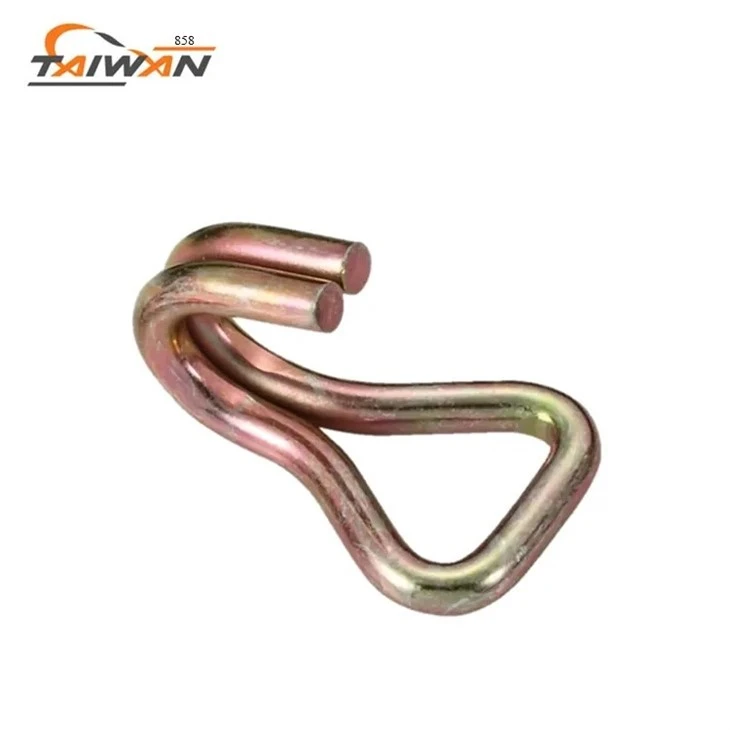
The design and geometry of the J Hook also impact its fatigue life. Hooks with smooth curves and proper fillets at stress - concentration points are less likely to experience fatigue failure. Sharp corners or sudden changes in cross - section can create stress concentrations, which are areas where the stress is significantly higher than the average stress in the component. This can accelerate crack initiation and propagation. Our Large Industrial Hooks are designed with optimized geometries to minimize stress concentrations and enhance fatigue life.
Loading Conditions
The type of loading the J Hook is subjected to is another critical factor. Cyclic loading, such as repeated lifting and lowering of heavy loads, can cause fatigue. The magnitude of the load, the frequency of loading cycles, and the ratio of maximum to minimum load (stress ratio) all affect the fatigue life. For instance, a J Hook that is used for continuous, high - frequency lifting operations will experience more fatigue than one used for occasional, light - load lifting.
Environmental Conditions
The environment in which the J Hook operates can also influence its fatigue life. Corrosive environments, such as those with high humidity, saltwater, or chemical exposure, can accelerate the fatigue process. Corrosion can cause pitting on the surface of the hook, which acts as stress concentration points and promotes crack initiation. Our Webbing Hook is designed to be used in a variety of environments, but proper maintenance is still required to ensure its long - term fatigue resistance.
Calculating the Fatigue Life of J Hooks
Calculating the exact fatigue life of a J Hook is a complex process that typically involves the use of advanced engineering techniques. One common approach is to use S - N curves (stress - number of cycles curves). These curves are obtained through fatigue testing of the material used in the J Hook. The S - N curve shows the relationship between the applied stress amplitude and the number of cycles to failure.
To calculate the fatigue life, engineers first need to determine the stress levels the J Hook will experience during its service life. This involves analyzing the loading conditions, the geometry of the hook, and the material properties. Once the stress levels are known, the S - N curve can be used to estimate the number of cycles the hook can withstand before failure.
However, it's important to note that real - world conditions can deviate from the idealized conditions used in laboratory testing. Therefore, safety factors are often applied to the calculated fatigue life to account for uncertainties. These safety factors ensure that the J Hook has a sufficient margin of safety during its service life.
Why the Fatigue Life of J Hooks Matters
The fatigue life of J Hooks is of utmost importance in industrial applications for several reasons:
Safety
Safety is the primary concern in any industrial operation. A J Hook that fails due to fatigue can cause serious accidents, leading to injuries or even fatalities. By understanding and ensuring the appropriate fatigue life of J Hooks, you can minimize the risk of hook failure and protect your workers and equipment.
Efficiency
A J Hook with a long fatigue life means less frequent replacement. This reduces downtime and maintenance costs, allowing your operations to run more efficiently. Instead of constantly replacing worn - out hooks, you can focus on your core business activities.

Cost - Effectiveness
Investing in J Hooks with a longer fatigue life may seem more expensive upfront, but it can be more cost - effective in the long run. The reduced need for replacement and maintenance can result in significant savings over time.
Maintaining and Extending the Fatigue Life of J Hooks
To ensure the longest possible fatigue life for your J Hooks, proper maintenance is essential. Here are some tips:
Regular Inspection
Regularly inspect the J Hooks for signs of wear, cracks, or corrosion. Any damaged hooks should be immediately removed from service and replaced. Visual inspections can often detect early signs of fatigue, allowing you to take preventive measures before a failure occurs.
Proper Use
Use the J Hooks within their specified load capacity and operating conditions. Overloading or subjecting the hooks to improper loading can significantly reduce their fatigue life. Provide proper training to your workers on the correct use of J Hooks to avoid misuse.
Environmental Protection
If the J Hooks are used in a corrosive environment, take steps to protect them. This can include applying protective coatings, storing the hooks in a dry environment, or using corrosion - resistant materials.
In conclusion, understanding the fatigue life of J Hooks is essential for ensuring safety, efficiency, and cost - effectiveness in industrial applications. As a J Hook supplier, I'm committed to providing high - quality hooks with long fatigue lives. If you're interested in learning more about our J Hooks or have specific requirements for your operations, I encourage you to reach out for a procurement discussion. We can work together to find the best J Hook solutions for your needs.
References
- "Mechanical Behavior of Materials" by Donald R. Askeland and Pradeep P. Phule
- "Fatigue of Materials" by Norman E. Dowling